Have you ever met someone named Khalil and wondered what their name carries with it? Perhaps you’re expecting a baby boy and searching for a name that feels both timeless and meaningful. Or maybe you’ve come across Khalil Gibran’s poetry and felt drawn to the name’s quiet strength.
Whatever brought you here, you’re about to discover that Khalil is far more than just a pleasant-sounding name. It’s a name wrapped in centuries of history, cultural richness, and emotional depth. In this guide, we’ll explore everything from its ancient roots to how it lives in everyday conversation today—giving you a complete picture that most quick-answer websites simply don’t offer.
Let’s begin this journey into one of the most beloved names across the Arabic-speaking world and beyond.
What Does Khalil Mean?
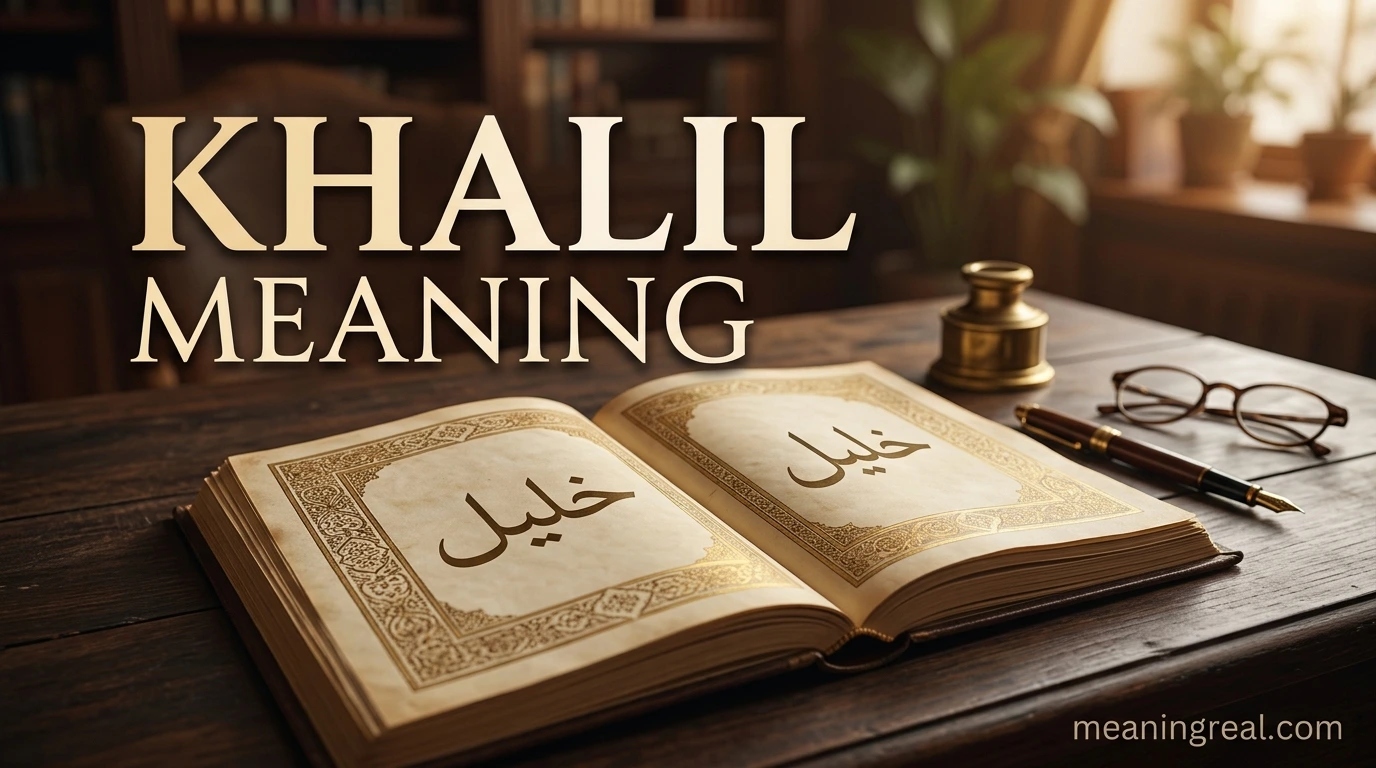
At its core, Khalil (خليل) means “friend,” “companion,” or “close associate” in Arabic. But this translation only scratches the surface. The word carries a sense of intimacy and sincerity that English words like “friend” struggle to fully capture. It suggests someone who is not just an acquaintance but a genuine, devoted companion—a person whose loyalty runs deep.
In Arabic culture, calling someone your khalil implies a bond that goes beyond casual friendship. It’s the kind of relationship where trust is absolute and presence is comforting. Think of it as the difference between someone you know and someone who truly stands by your side.
There’s another layer to the meaning that many people miss: Khalil can also describe someone who is “pure” or “unblemished.” This secondary meaning connects to the idea of sincerity—a friend who is genuine, without hidden motives or pretense. When parents choose this name for their son, they’re often expressing a hope that he will grow into someone known for his authenticity and warmth.
The name also has a spiritual dimension. In Islamic tradition, the Prophet Ibrahim (Abraham) is often called Khalilullah—”the friend of God.” This elevates the meaning of Khalil to something sacred: a relationship built on love, devotion, and unshakeable faith.
The Origin and Historical Roots of Khalil
Khalil is an Arabic name with roots stretching back to the earliest days of the Arabic language. It comes from the root word خ-ل-ل (kh-l-l) , which relates to piercing, penetrating, or going deep into something. This root gives us words associated with depth, sincerity, and intimate connection—because true friendship, after all, “pierces” the surface and reaches the heart.
The name appears in pre-Islamic Arabic poetry, where khalil was used to describe a trusted companion or a close confidant. In those ancient verses, having a khalil was considered one of life’s greatest treasures—a person to share joys, sorrows, and secrets with.
With the arrival of Islam, the name gained additional significance. The Prophet Muhammad’s close companion and confidant, Abu Bakr, was sometimes referred to in terms of deep friendship, and the concept of khalil became associated with the highest form of human connection. The term Khalilullah (Friend of God) for Prophet Ibrahim cemented the name’s spiritual weight.
Over centuries, Khalil spread across the Muslim world—from the Arabian Peninsula to North Africa, from the Levant to South Asia. It became a common name among Muslims, Christians, and even some Jewish communities in the Middle East, reflecting its universal appeal as a name about friendship and sincerity.
The Linguistic Journey: How Khalil Traveled Across Languages
One of the fascinating things about Khalil is how it has adapted and transformed as it moved through different cultures and languages.
In Arabic, the name is written as خليل and pronounced with a distinctive guttural “kh” sound at the beginning—a sound that doesn’t exist in English. This is why you’ll see different transliterations: Khalil, Khaleel, Kalil, or even Halil. Each reflects an attempt to capture that unique sound using different alphabets.
When the name traveled to Turkey, it became Halil—dropping the initial “kh” sound because Turkish doesn’t have that phoneme. Today, Halil is a common Turkish name, and you’ll find it in everything from historical records to modern-day Istanbul.
In Persian and Urdu, the name remained closer to its Arabic form, though pronunciation varies. In South Asia, particularly in Pakistan and India, Khalil is pronounced with a softer “kh” that’s more like a breathy “h.”
The name also found its way into Spanish and Portuguese through the Moorish influence on the Iberian Peninsula. Some scholars suggest that the name Calila (as in Calila e Dimna, a famous medieval Spanish text) may have connections to the Arabic Khalil, though this is a matter of linguistic debate.
In English-speaking countries, Khalil has gained popularity in recent decades. According to U.S. baby name statistics, Khalil entered the top 1000 names in the 1970s and has maintained a steady presence since, appealing to parents looking for a name that’s distinctive but not difficult to pronounce.
How to Pronounce Khalil Correctly
Pronunciation is where many people stumble with Khalil, especially if they’re not familiar with Arabic sounds. Let’s break it down.
The name has two syllables: Kha-leel.
The first syllable starts with that challenging “kh” sound. Think of it as a raspy “h” coming from the back of your throat—similar to the sound you make when clearing your throat gently. It’s not a hard “k” followed by “h” as in “black hat.” Instead, it’s a single, smooth sound.
The second syllable is straightforward: “leel,” rhyming with “feel” or “peel.” The stress falls on the second syllable, so it’s kha-LEEL.
For English speakers who struggle with the guttural “kh,” don’t worry. Many native Arabic speakers understand that this sound doesn’t exist in English and won’t be offended if you pronounce it as “Ha-leel” or even “Ka-leel.” The key is to avoid saying “KAY-lil” or “KAL-il”—these pronunciations change the name’s character entirely.
Here are some phonetic approximations:
- Arabic: kha-LEEL (with a throaty kh)
- English approximation: ha-LEEL or ka-LEEL
- Turkish: ha-LEEL
- French: kha-LEEL (the French “kh” is closer to the Arabic sound)
In everyday conversation, you’ll hear variations, but the essential rhythm—two syllables with stress on the second—remains consistent.
The Many Spellings of Khalil
Because Arabic doesn’t use the Latin alphabet, there’s no single “correct” way to spell Khalil in English. This has led to several common variations, each with its own logic and appeal.
Khalil is the most common spelling in English-speaking countries. It closely mirrors the Arabic pronunciation and is the spelling used by most notable figures with the name.
Khaleel is another popular variation. The double “e” emphasizes the long “ee” sound in the second syllable, making the pronunciation more intuitive for English readers. You’ll find this spelling in many South Asian communities and among some African American families.
Kalil drops the “h” entirely, simplifying the name for those unfamiliar with Arabic phonetics. This spelling is common in Brazil and other Portuguese-speaking countries, where it has become a name in its own right.
Halil is the Turkish version, and it’s also used in some Balkan countries. It’s simpler to pronounce for speakers of languages without the guttural “kh” sound.
Kaleel, Khalill, and Khalyl are less common but occasionally encountered. Some parents choose these spellings to create a unique identity or to honor a family member with a particular spelling preference.
When choosing a spelling, consider how you want the name to be perceived. “Khalil” carries a classic, Arabic feel. “Khaleel” feels slightly softer and more accessible. “Kalil” is simpler but loses some of the name’s cultural flavor. There’s no wrong choice—just different paths to the same beautiful name.
Personality Traits Associated with Khalil
In many cultures, names are believed to shape character, and certain names carry expectations and associations. While psychology doesn’t support the idea that names determine personality, cultural perceptions do create interesting patterns. What traits do people associate with someone named Khalil?
Warmth and approachability top the list. Because the name literally means “friend,” people often expect someone named Khalil to be friendly, welcoming, and easy to talk to. This expectation can become a self-fulfilling prophecy—many Khalils grow up embodying the hospitality and openness their name implies.
Loyalty is another strong association. A khalil is a devoted companion, so people named Khalil are often seen as reliable and trustworthy. In friendships and relationships, they’re expected to be the kind of person who shows up when it matters.
Thoughtfulness also comes through. Perhaps because of the name’s association with Khalil Gibran—the celebrated Lebanese-American poet and philosopher—people named Khalil are often perceived as reflective, artistic, or intellectually curious.
Modesty and sincerity round out the picture. The name’s secondary meaning—”pure” or “unblemished“—suggests someone without guile, someone who speaks truthfully and treats others with respect.
Of course, every Khalil is an individual with his own unique personality. But the name carries a positive energy that many parents hope their sons will embody: friendly, loyal, thoughtful, and sincere.
Khalil in Culture and Real-Life Usage
Khalil appears in various cultural contexts, and understanding these can give you a fuller appreciation of the name’s place in the world.
In Literature and Philosophy
The most famous Khalil in modern culture is Khalil Gibran (1883-1931), the Lebanese-American poet, philosopher, and artist. His book The Prophet has sold millions of copies worldwide and remains one of the most beloved works of spiritual literature. When people hear the name Khalil, they often think of Gibran’s profound insights about love, freedom, and the human condition.
In Religious Context
As mentioned earlier, Prophet Ibrahim is known as Khalilullah—the Friend of God. This connection gives the name a sacred quality. Parents who choose Khalil for their son may hope he grows into someone with a deep, personal relationship with his faith and a commitment to goodness.
In Music and Entertainment
Several notable figures in entertainment bear the name. Khalil Mack is a famous American football player known for his athletic prowess. Khalil Greene is a former Major League Baseball player. In music, you’ll find artists and producers named Khalil in genres ranging from hip-hop to traditional Arabic music.
In Everyday Arabic Conversation
In Arabic-speaking countries, khalil is more than just a name—it’s a word used in daily conversation. You might hear someone say, “هو خليلي” (huwa khaleeli) meaning “He is my close friend.” Or you might hear “خليل قلبي” (khalil qalbi), which translates to “friend of my heart”—a tender expression of deep affection.
In Urdu and Hindi, the word khalil (often pronounced “khaleel”) carries similar connotations of friendship and sincerity. In these languages, it’s both a name and a word that appears in poetry and literature.
Common Mistakes People Make with the Name Khalil
Even beautiful names come with their share of mix-ups. Here are the most common mistakes to avoid.
Mispronunciation
As we discussed, saying “KAY-lil” or “KAL-il” is the most frequent error. If you’re introducing yourself as Khalil, don’t be surprised if you have to correct pronunciation. A gentle “It’s kha-LEEL” usually helps.
Confusion with Similar Names
Khalil is sometimes confused with:
- Khalid: A different Arabic name meaning “eternal” or “immortal.” While they sound similar, they’re distinct names with different meanings.
- Jamal: Another Arabic name that starts with the same “j” sound in some transliterations, though the names are unrelated.
- Kareem: Both have the “k” sound and Arabic origin, but they’re different names.
Misspelling
The most common misspellings are “Khaleel” (for those expecting the standard spelling), “Kalil,” and “Khallil.” When giving your name over the phone, it’s often helpful to spell it out: “K-H-A-L-I-L.”
Wrong Cultural Assumptions
Some people assume Khalil is exclusively Muslim, but it’s used by Christians in the Middle East (particularly in Lebanon, Syria, and Egypt) and by people of various faiths around the world. Similarly, while it’s most common among Arabs, it’s used by Turkish, South Asian, and African communities too.
Khalil in Modern Times: Popularity and Variations
How popular is Khalil today? Let’s look at the numbers and trends.
In the United States, Khalil has hovered within the top 500 names for boys since the 1970s. In 2022, it ranked around #400, according to Social Security Administration data. It’s most common in states with large Arab-American populations, such as Michigan and California, but it has spread across the country as Arabic names have become more mainstream.
In the United Kingdom, Khalil ranks in the top 800 names for boys and is particularly popular in London and other diverse urban areas. In France, the name is more common, reflecting the large North African population; it frequently appears in the top 200 names.
In the Arab world, Khalil is a classic, well-established name that never goes out of style. It’s used across generations—you’ll find Khalils who are grandparents and Khalils who are newborns.
Diminutives and Nicknames
Like many names, Khalil has variations and nicknames:
- Khalo or Khaloo is a common affectionate nickname in Arabic-speaking families.
- Lee or Khali are English-friendly nicknames that some people adopt in Western countries.
- Halil is both a Turkish variation and sometimes a nickname in other contexts.
These nicknames reflect the name’s versatility and how it adapts to different cultural contexts.
Khalil in the Arts and Media
The name’s association with art and beauty isn’t accidental. Khalil Gibran’s legacy has made the name synonymous with poetic sensibility and spiritual depth. But he’s not alone.
In Arabic cinema and television, many actors and directors carry the name. In music, various performers have used Khalil as a stage name or given name. In literature, the name appears in novels and short stories set in the Middle East.
In Western media, Khalil has occasionally appeared as a character name, often used to add cultural depth or diversity. Each appearance reinforces the name’s positive associations.
What Khalil Means in Different Languages
Because Khalil is borrowed from Arabic into many languages, the word has similar but slightly different resonances in each.
In Arabic, Khalil is both a name and a common noun meaning “friend.” It’s used in poetry, literature, and daily speech to express deep affection.
In Turkish, Halil is a given name, and you might also hear the word halil used to mean “friend” in a poetic context.
In Urdu and Hindi, Khalil is a name and a word used in poetry to denote a close friend. In these languages, it carries romantic and spiritual connotations.
In Swahili, which has been influenced by Arabic, you might hear halili used to mean “friend” or “companion.”
In Spanish and Portuguese, the name Khalil has gained popularity as a given name, particularly among families with Middle Eastern heritage and those who simply appreciate its sound and meaning.
Famous People Named Khalil
Let’s meet some notable Khalils who have left their mark on the world:
- Khalil Gibran (1883-1931): Lebanese-American poet and artist, author of The Prophet
- Khalil Mack (born 1991): American football linebacker, NFL Defensive Player of the Year
- Khalil Greene (born 1979): Former Major League Baseball shortstop
- Khalil Rountree Jr. (born 1990): American mixed martial artist in the UFC
- Khalil Shakir (born 2000): American football wide receiver
- Khalil-ur-Rehman Qamar: Pakistani screenwriter and director
- Khalil Suleiman: Egyptian actor and director
- Khalil Haddou: Moroccan-French footballer
- Halil İnalcık (1916-2016): Turkish historian of the Ottoman Empire
- Halil Erdoğan: Turkish musician
These individuals represent just a small sample of the many Khalils making their mark in various fields, from sports to arts to scholarship.
FAQ: Common Questions About the Name Khalil
Is Khalil a Muslim name?
Khalil is an Arabic name with strong ties to Islamic tradition—it’s used to describe Prophet Ibrahim as “Khalilullah” (Friend of God). However, it’s not exclusively Muslim. Christians in the Middle East, particularly in Lebanon, Syria, and Egypt, also use the name. It’s more culturally Arabic than strictly religious, and you’ll find Khalils of various faiths around the world.
What is the female equivalent of Khalil?
Arabic names don’t always have direct male-female pairs, but the feminine form of Khalil is Khalila (خليلة) , which means “close friend” or “companion.” It’s a beautiful name in its own right, though less common than its male counterpart.
Is Khalil mentioned in the Quran?
Khalil isn’t mentioned as a personal name in the Quran, but the concept of khalil (friend) appears in descriptions of Prophet Ibrahim, who is called Khalilullah. This gives the name a profound spiritual resonance for Muslims.
How do you write Khalil in Arabic?
Khalil is written as خليل in Arabic. The letters are kha (خ), lam (ل), ya (ي), and lam (ل). Reading right to left, it’s: خ + ل + ي + ل.
What is the difference between Khalil and Khalid?
Both are Arabic names starting with the “kh” sound, but they have different meanings and roots. Khalil means “friend” or “companion,” while Khalid means “eternal” or “immortal.” They’re distinct names with separate histories.
Can Khalil be a surname?
Yes! In many Arab countries, it’s common for a family to have a surname derived from a given name, and “Khalil” is no exception. You’ll find people with the last name Khalil in Lebanon, Syria, Egypt, and beyond.
Is Khalil a popular name in the US?
Khalil has been in the top 1000 American baby names since the 1970s and typically ranks around 400-500. It’s not as common as names like David or Michael, but it’s well-established and growing in popularity, particularly in diverse communities.
How do you pronounce Khalil in English?
The most common English pronunciations are “ha-LEEL” or “ka-LEEL.” The Arabic pronunciation includes a guttural “kh” sound that doesn’t exist in English, but “ha-LEEL” is a widely accepted approximation.
Conclusion: The Enduring Charm of Khalil
Khalil is more than a name—it’s a statement about what matters most in life. It speaks to the universal human need for connection, for someone who will stand by us, for a friend who is truly present.
When parents choose Khalil for their son, they’re expressing a beautiful hope: that he will grow into someone known for his warmth, his loyalty, and his sincerity. They’re giving him a name that carries centuries of cultural richness, that connects him to poets and athletes and philosophers, that whispers of friendship in the most profound sense.
Whether you’re considering Khalil for a child, writing a character, or simply curious about the name you encountered, you now have a deeper understanding of its meaning, its history, and its heart. It’s a name that invites connection, that opens doors to conversation, and that reminds us—every time we say it—that being a true friend is one of the most important things we can be.
In a world that often feels fragmented, Khalil is a name that says: “You are not alone. I am here with you.”